
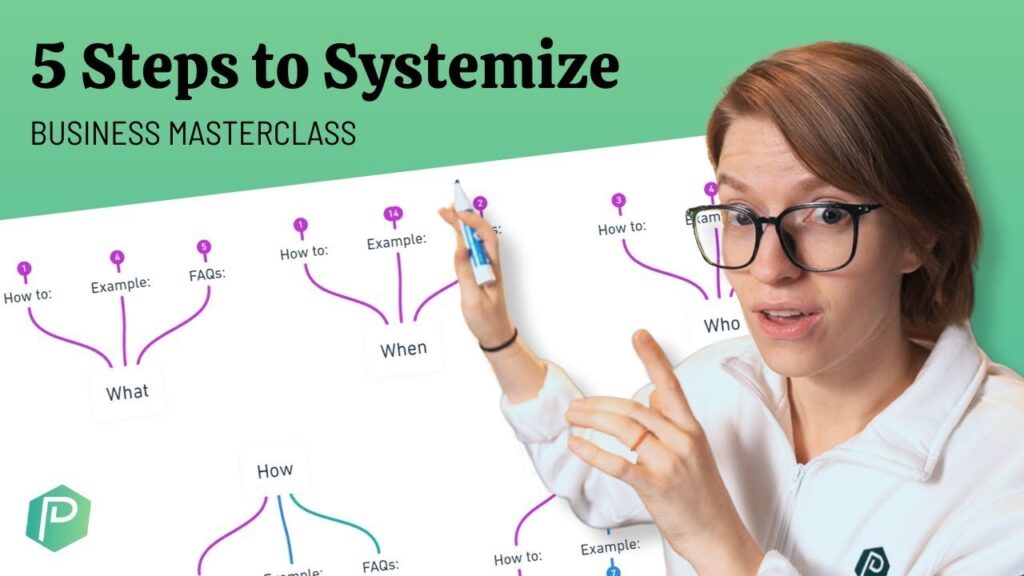
Building effective business systems doesn’t require complex flowcharts or expensive consultants – it starts with documenting what you actually do in your business using five key components: what, when, how, who, and improvement. By following this streamlined approach focused on practical documentation and iterative refinement, you can create systems that make your daily operations more calm, relaxed and predictable without getting bogged down in unnecessary complexity.
This systematic approach is specifically designed for lean teams, startups, and small business owners who want smooth operations without sacrificing speed or creating bureaucratic overhead.
In my latest video, I break down these five essential components with real examples and practical applications you can implement:
Step 1: Define What You Do
The first critical step is documenting every action and responsibility in your business. This doesn’t have to be perfect initially – start by listing out your main activities and continue adding to it over time. For example, if you run a YouTube channel, you might break it down into three main categories: producing videos, editing videos, and publishing videos.
Step 2: Define When You Do It
Next, establish the cadence or frequency for each activity. This could be regular intervals (like posting one video per week) or turnaround times for reactive tasks (like responding to client emails within one business day). Using a task management tool like ClickUp or SmartSuite can help organize these schedules effectively.
Step 3: Document How You Do It
The “how” step involves creating what I call process equipment – the practical documentation that makes execution easier and more consistent. This includes:
- Checklists
- Standard Operating Procedures (SOPs)
- Templates
- Decision trees
Step 4: Assign Who Does What
Clearly define responsibility and ownership for each process. This can be done through job descriptions or, more effectively, by using assignee fields in your task management system. For solopreneurs, this step helps identify which tasks could potentially be delegated or automated in the future.
Step 5: Continuous Improvement
The final step is ongoing refinement and optimization of your systems. This can be done through:
- Tracking ideas and feedback
- Monitoring key metrics
- Documenting and learning from errors
For additional guidance on implementing these steps, I recommend checking out my free training at ProcessDriven Blueprint where I dive deeper into each component and provide practical templates and structures to help you get started.