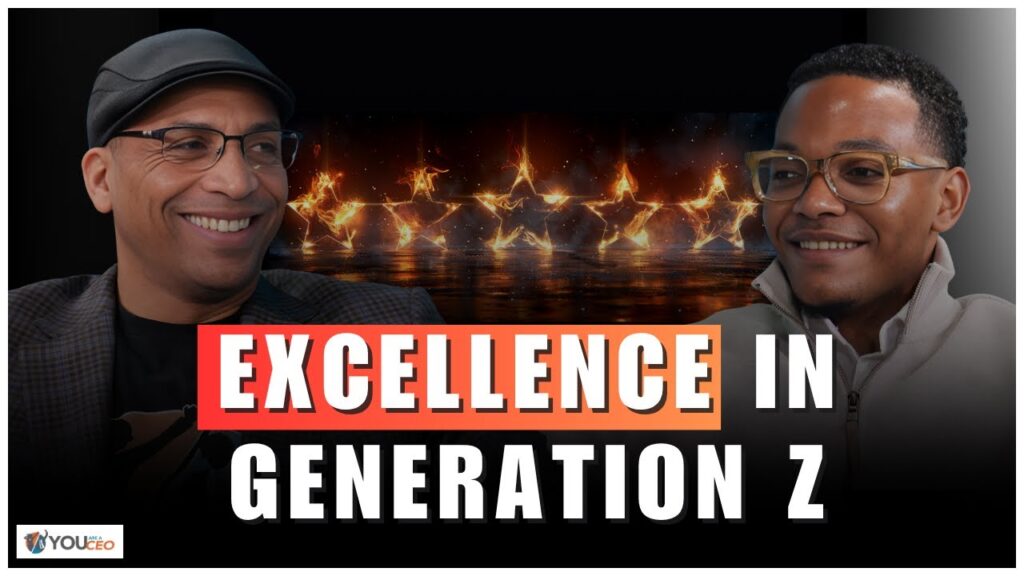
Generation Z faces unique challenges in achieving high performance while being the youngest professionals in corporate environments. This article reveals eight proven strategies that enable young achievers to overcome imposter syndrome, build credibility through data-driven results, and leverage mentorship to accelerate career growth regardless of age limitations.
By implementing these practical approaches, Gen Z professionals can transform perceived disadvantages into competitive advantages that drive exceptional results.
In my video discussion with rising Salesforce professional Robert Grimes III, we explore the real-world tactics that helped him advance to a global leadership role by age 24.
Overcoming Imposter Syndrome When You’re the Youngest in the Room
When you look around the room and realize everyone is much older, but you still have to do your job, specific thoughts and feelings emerge. Imposter syndrome hits hard, especially in mature corporate spaces where you question if you really belong despite putting in all the years of work and learning.
As someone who was born later in the year and usually one of the younger ones throughout my entire grade, this feeling translates into professional environments. You get that reality shock of wondering how you ended up working with folks who have been in the industry for 15, 20, or 35 years when you’re only 21 or 22.
The key is staying motivated and remembering your reason why. Why are you here? Why have you overcome all the different struggles and obstacles on your journey to be in this position? Making sure you maintain the path you know is your reason for doing this work.
Building Credibility Through Global Impact and Responsibility
Real achievement requires taking on substantial responsibility early. In my current role as partner automation strategy and operations senior analyst at Salesforce, I work in the global partnerships organization focusing on automation and AI agent experiences with partners and customers.
This role reaches all over the world – North America, Latin America, EMEA (Europe), and APJ (Australia and Asia). There are specific projects where I touch all seven continents. The exposure to international thinking and global operations provides invaluable perspective that accelerates professional growth.
The Reality of Global Responsibility
Being 24 years old and realizing that one day you would be touching seven continents creates a unique appreciation for the scope of professional impact possible. This global reach demonstrates how young professionals can achieve significant responsibility when they prove their capabilities through consistent performance.
Learning Life Skills Through Family Dynamics
Being the oldest of six siblings ranging from age 22 down to seven years old creates natural leadership development. Having two separate households with different standards and ways of living teaches you how to navigate different dynamics and personalities.
Being the oldest at such an early age definitely puts you in positions to have to make right choices and smart choices and not think so much about yourself. There are other things to consider because you’re doing the babysitting and wanting to be part of their lives, spending time with them and trying to teach them what you learned growing up.
This family structure develops critical business skills: seeing the real in every situation, learning how to slow down when there’s a lot happening, and developing the ability to take a step back and assess every situation from multiple variables. These skills directly translate to handling different business dynamics and making decisions with foresight.
How Music Develops Discipline and Timing
Music training provides foundational skills that transfer directly to business success. Starting with drums at age three after my grandfather noticed natural rhythm, I progressed to playing professionally by age 14 with local jazz bands and eventually into vocal production and studio mixing.
The main job of a drummer is to keep the tempo, but it’s also got to feel good. You want to lock into the tempo and make people dance. This translates to business operations where you want a consistent flow of productivity – not spending too long or too little time on things, but maintaining consistent, even output that creates good products.
Applying Musical Principles to Business Operations
In drumming, there are certain times where you might not want to be too heavy on the kick or too heavy on the snare. You have to adjust based on where the music is at that point. Similarly, in business you need to keep things even and balanced while making adjustments and still making it feel good – creating an experience where the product does its job so seamlessly that people no longer notice it’s there.
Making Strategic Career Transitions
Leaving a promising music career required recognizing when an environment no longer aligned with personal values and long-term goals. Despite having professional gigs and studio experience, the music industry environment conflicted with maintaining strong Christian values and relationships that were priorities.
The decision came when music started becoming bigger than my relationship with God, and that was sitting heavy on my heart. Combined with no longer feeling happy about the work – realizing that being in studios 48 to 72 hours at a time wasn’t really living – made the transition necessary.
Strategic career changes require evaluating whether your current path supports your core values and long-term vision, even when you’re successful in your current field.
Recognizing and Seizing Opportunities
The transition from music to business came through recognizing an unexpected opportunity. When Year Up program representatives came to my intro business course at Diablo Valley College, I initially dismissed it thinking I didn’t need the program designed for those less opportunity-prone.
However, trusted mentors encouraged me to pursue it despite my hesitation. Going back to what we discussed about doing things even when you know it’s right but don’t want to – I decided to trust their guidance and do it. This led directly to my internship and eventual full-time role at Salesforce.
Opportunity recognition is critical for high achievement. Any opportunity that comes and makes you uncomfortable should push you to grow. I’ve never been in a situation where an opportunity made me uncomfortable or question if I had the skills, where I didn’t profit from that opportunity.
Creating Your Own Role
Three months into my six-month internship, my manager offered me a full-time role without needing an interview, resume, or standard hiring process. They even let me create my job description, generating my day-to-day responsibilities and stretch projects. The entire time I’ve been at Salesforce, I’ve hand-designed each role I’ve had on the team.
Eight Essential Skills for High Achievement
Through experience advancing in a global organization while being the youngest team member, several critical skills emerge as essential for high achievement:
1. The Ability to Commit
Commitment means really putting your feet in, digging in, and doing the work. This applies to committing to yourself, to the work you’re doing, and to learning in its true essence. The ability to commit wholeheartedly keeps you grounded and enables growth in skills, abilities, and team environments.
2. Having a Curious Mind
Always ask questions, even on things you’re considered an expert on. Ask folks who know more: “What am I missing? What can I add to this?” Curiosity opens doors – one question to an SVP led to a whole new project that resulted in my first promotion when I challenged thinking about how a product decision would impact global customers with different currency access.
3. Analyzing and Interpreting Data
Being able to analyze data from whatever you’re putting out, interpret it, and understand what value that’s creating across different groups is essential. Take that data, analyze it, interpret it, and then be able to tell a story. When you can correlate your work to real numbers and make it objective, you take yourself out of limitations people try to put on you.
4. Storytelling
Storytelling is underappreciated but critical – if you can tell a story, you can move heaven and earth. When you bridge the gap between data and real-life experiences through storytelling, you leave no room for gaps. You eliminate any kind of limitation because you’re bringing clarity